ON WHAT THE WITNESS HAS PAID
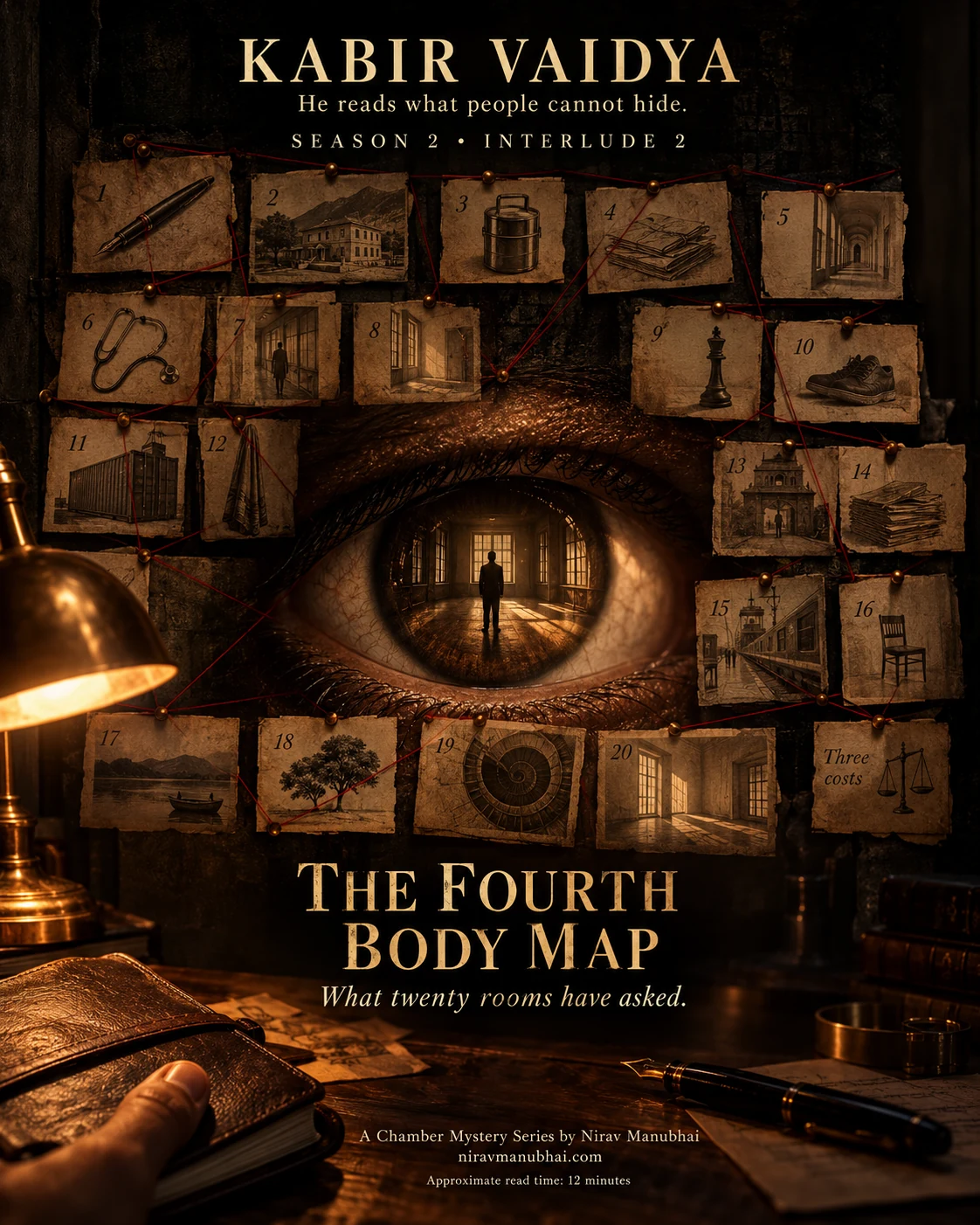
Ten rooms this season. Twenty rooms across two seasons. The empty room has asked the question Season Two avoided asking Kabir directly.
ONE · THREE COSTS
Arjun lost more than a mock rank. He lost the clean belief that the adults measuring merit were using one scale. The blink, when it came, was the first thing he did that belonged entirely to him. He is seventeen. He will carry the weight of having permitted himself to remember for the rest of his life, in rooms that will ask him to forget.
Ananya may preserve the original file and still lose work. Evidence does not refund safety. The mirror stays covered. The tape at the corners still holds. She left the van and walked toward the set, and her hands were no longer holding an invisible weight. What they will carry tomorrow is a different question.
Rakesh pressed Submit after twenty years and created a record his local supervisors could not quietly remove. The same keystroke may also end the life he had learned to survive. The two-room flat. The sweet tea. The walk home at seven-fifteen. All of it now carrying a number it did not have three nights ago, and his thumb — which had been counting toward midnight — simply stopped.
The witness is not automatically a hero. A hero changes the ending. A witness may only prevent the ending from occurring without a record.
Those are different achievements, and only one of them is usually celebrated.
TWO · THE UNEVEN WEIGHT
Kabir has entered ten rooms this season, named what people were carrying, and watched them decide what to do with it.
Harshad signed — the only person in nine rooms whose decision was to continue the system rather than interrupt it. That too is a choice the witness must record without resolving.
Mrs. Sharma photographed the audit trail, and her hands steadied after the first tilted frame.
Ramesh released what he had been asked to hold, and the shaking left him in stages.
Arjun permitted himself to remember, and the blink could not be reversed.
Ananya left the mirror covered and named who wanted it removed, and walked toward the set.
Arvind attached his name to the bid, and his feet were still angled toward the door.
The Chief Research Officer set the glass down on the other side of the table, and the ripple was the only sign her hand had been shaking.
Sanjay signed the correction, and the pen touched the paper three times.
Rakesh submitted the report, and the thumb stopped counting.
Meera spoke for seventeen seconds, and the chin lifted two degrees.
Anand stood in the empty room until Kabir had nowhere left to look except at the thumb pressing his own notebook closed. Outside, Kabir opened it and wrote the sentence he could not yet finish.
Each action belonged to the person who would pay for it.
Kabir recorded them and left.
His hands have been at his sides for most of it. His breathing has been steady. His notebook has been open or closed depending on the room, but the hand holding the pen has not trembled. The body that reads other bodies has now been asked what it carries.
Distance may be the proper limit of a witness. It may also be a refuge. The empty room did not decide which one it was for Kabir. It only made the question visible.
The notebook is open now. The question is no longer whether Kabir can see what a room asks. It is what knowing requires of him.
"The witness sees the cost other people pay. The harder question comes when someone asks what the witness has lost."
Kabir Vaidya will return.
🙏 Nirav Manubhai