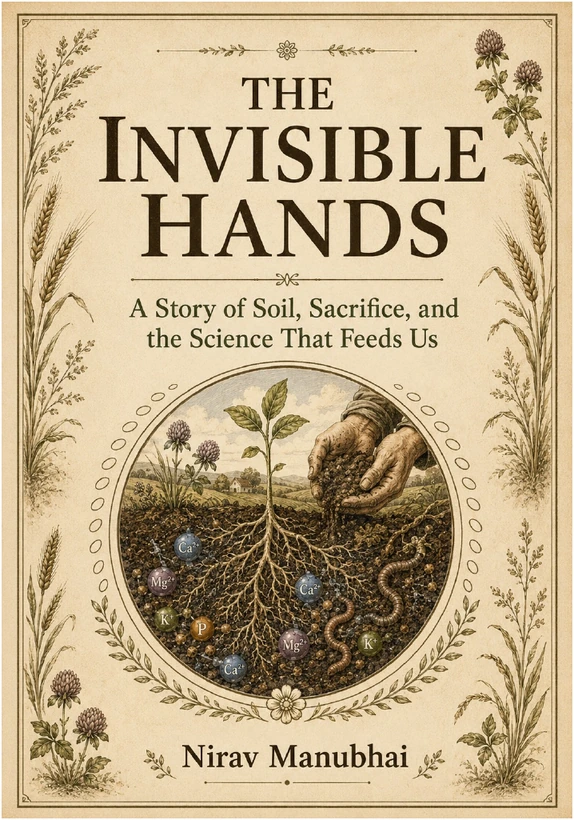
He dug a hole. Not a big hole. Just deep enough to put his hands in.
He knelt. He closed his eyes. He felt.
The old farmer who lived at the edge of the village had told him once: "You are looking with your eyes. Close them. Use your hands. The soil speaks."
The boy closed his eyes.
He felt the crumb. The way the soil broke apart in his fingers, not like brick but like cake. The old farmer had called this "good structure." He had said: "When the soil is alive, it breathes. It has pores — tiny tunnels — that let in air, let water drain, let roots grow deep."
He smelled. The soil was sweet. Not sour. Not dead. The old farmer had said: "Sweet soil is alive. Sour soil is sick."
He opened his eyes. He looked at his hands. Dark. Rich. Crumbly.
He thought: "There is a city under my feet. I have been walking on it all my life. I never knew."
He thought of his mother again. She had been the one who taught him to look closely. "The world is not what it seems," she used to say. "There is always more underneath." He had not understood then. Now, kneeling in the soil, his hands dark with earth, he understood.
He wished he could tell her.
He wiped his hands on his shirt. The stain did not come out. He did not want it to.